If there is one thing I love in reenactment, it’s jumping onto the public’s misconceptions about a historical practice. And needles is one of those things.
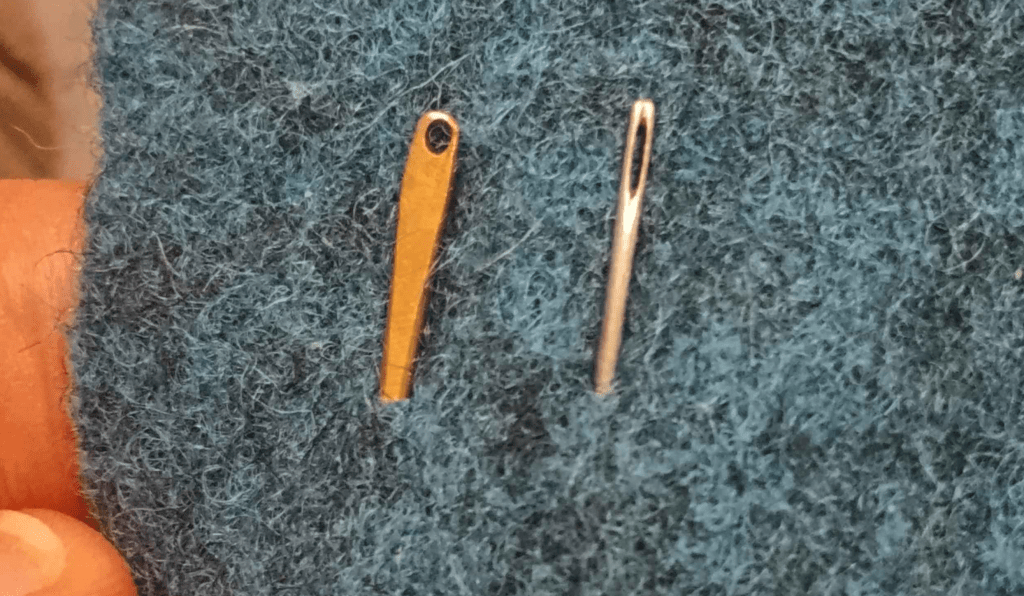
If you get into historical sewing you will find countless manufacturers making a kind of needle out of wire where the end is flattened and a hole punched out (often of centre). The wire is then usually sharpened to a point and called done.
This definitely creates something that looks somewhat like a needle, and can be used as one. But the hammered flat shape, crude hole punch, and complete lack of care to file and polish the work makes it useless for any fine work. And once it starts snapping all your thread and leaving unsightly holes in everything, it’s useless for any work in my opinion.
So why are medieval reenactment needles like that?
It’s simple, there is a misconception that crafts in the past were like ours, but crude. Cooking was bland and overdone, clothes were sacklike and heavy, needles were thick and poorly made. The idea that people in the past were simply us but somehow less refined is the root of most reenactors’ and publics’ misconceptions.
With a lack of a solid textual source outlaying the practice of needle making, due to the lack of any established guild. People have resorted to experimental archaeology armed only with misconceptions and a selective use of sources.
How did they really make them then?
You don’t even need anything particularly sophisticated to make a needle that looks a lot like our ‘modern’ needles. Without any written instructions of needle making we cannot say the process exactly; However there is evidence of drill marks, splitting and welding the ends together, and the punch in either round or chisel form (centred properly).
See below a selection of finds from Coppergate, made from Iron and Copper, with several styles of eye and some of which are quite fine (as small as 37mm long). There’s even some with triangular profiles for leatherwork!
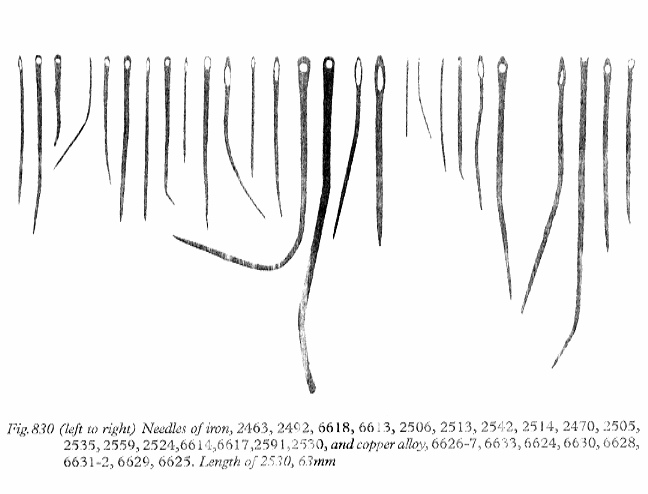
In short, needles are a fantastic display of how delicate intricate work was practiced in the medieval period. These needles were carefully made, for the purpose of shoemaking, drapery and intricate embroidery.
As for where to get these needles I would advise seeking out handmade needles, such as those still made for Sashiko. These are still made by hand, punching and drilling the holes, sharpening and polishing them for comfortable use in hand sewing.
 Time Travel Garm
Leave a comment