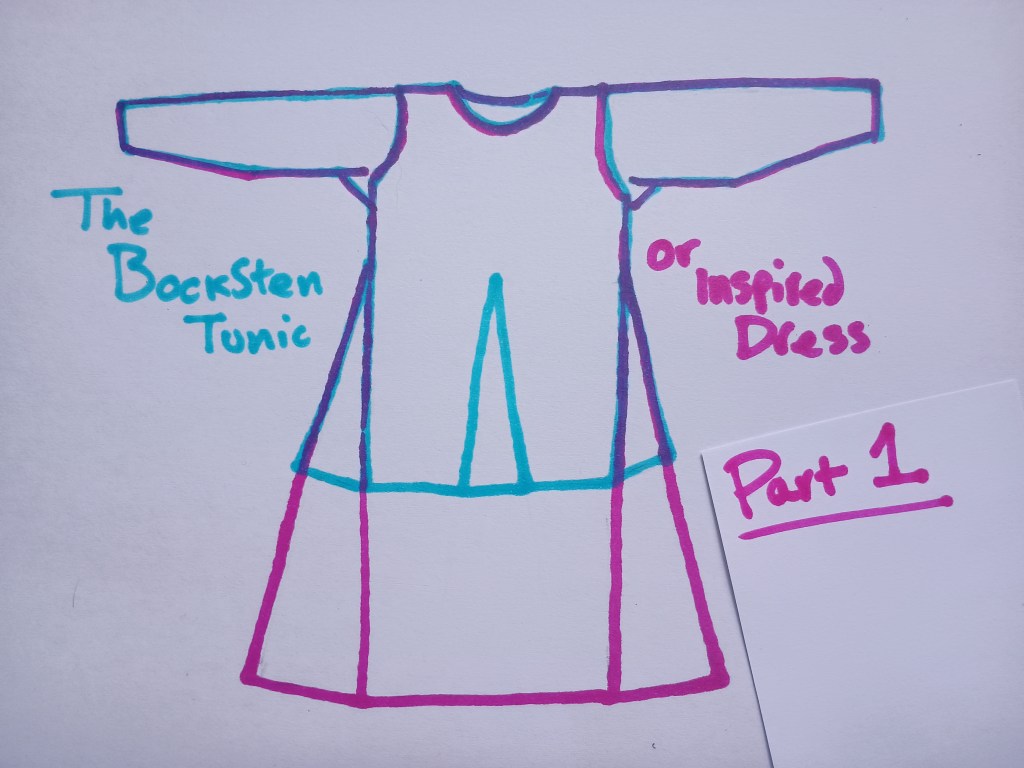
There are several tunics we have extant from in or around the 12th century. One of the best examples we have is from the body of the ‘Bocksten man’ found in what is modern day southern Sweden. The body of the Bocksten man is dated from anywhere between 1250-1520, his simple clothing makes him hard to date on fashions alone.
Most if not all medieval tunic patterns you find on the internet are interpreted from the Bocksten in one way or another, especially in regards to its underarm gores. This is likely because this is the best preserved tunic, and can be broken down into very simple shapes without having to account for extensive piecing.
For those reasons as well, I will be focusing on the Bocksten to show how an extant can be made into a functional garment for re-enactment.
The status of the Bocksten man and thus his tunic.
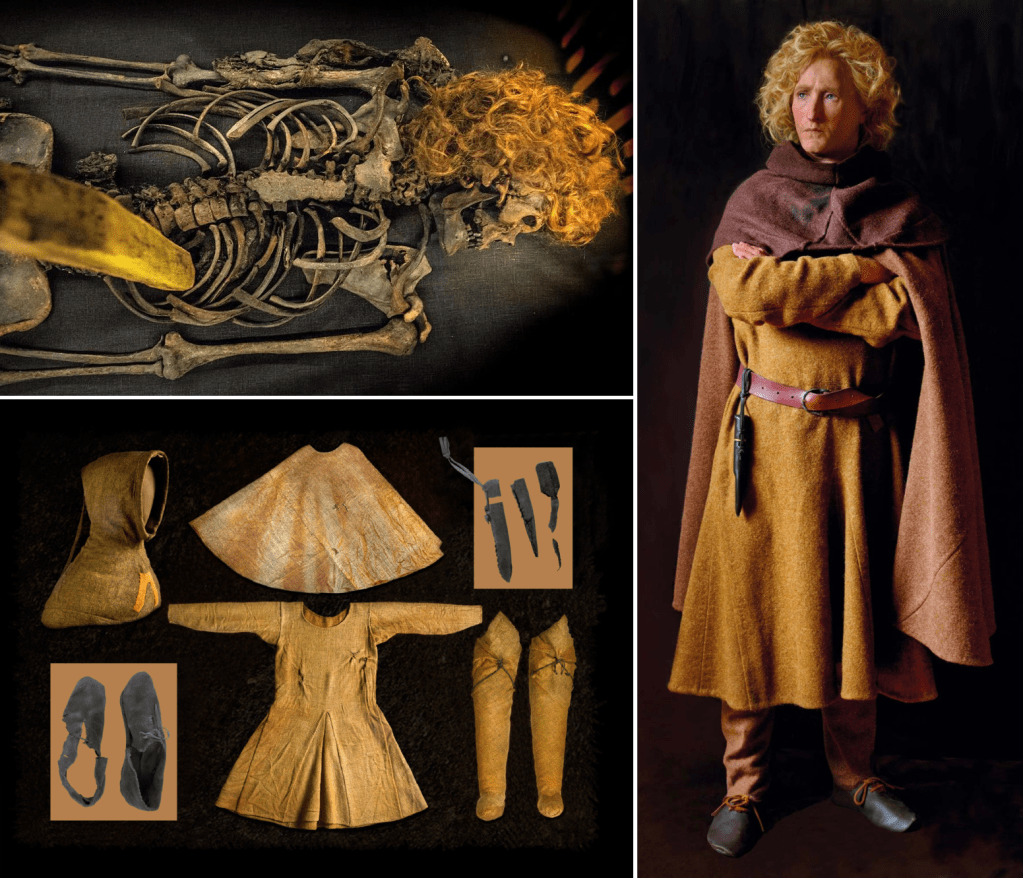
The Bocksten man was found with a wool; tunic, hose, and cloak, leather shoes, and two leather belts and two knives. His hood, also of wool, was found nearby. He also had ‘socks’ of scrap wool wrapped around his feet. Nothing else of note was found on his body, and it is concluded due to the manner of his burial he was murdered.
From the outfit he wore, especially the style of hose with no braies and it being made from a local wool rather than imported cloth, Bocksten man was of a lower social status (not noble). A traveller possibly who fell afoul while stealing or entering the wrong territory.
His clothing is however is in good condition, no significant patching or repair. This may lead you to think that it is new, however there is distinct colouration on the tunic from his belts. So it’s clear this person didn’t encounter heavy wear to their clothing despite wearing it often.
So a tunic such as this one would suit someone who can afford to create a whole new tunic, not repurposing. And who does not perform labour which would damage it. Such as a sergeant, house servant or skilled tradesman. This does not rule it out for the lower classes however, as before a tunic becomes heavily patched and worn it would first have been new.
What’s the pattern?
The Bocksten tunic was found in pieces, the linen that held it together had disintegrated while the wool stayed. This means we know exactly what pieces went into it. Breaking these down in the image below you can see how the design is very simple, with little aggressive tailoring.
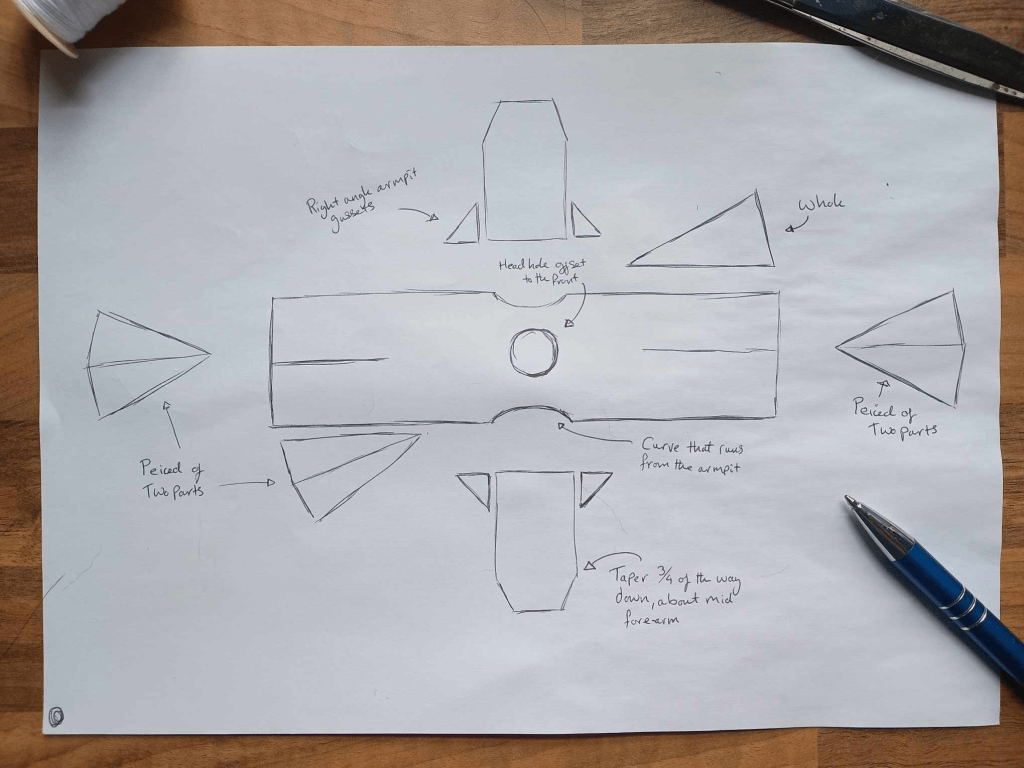
While the above may look like a lot of parts for this garment, when reduced down to the distinct geometric shapes there is only four pattern pieces. A body, arms, underarm gusset and triangular gores. The Bocksten man’s tunic has triangular gores which are sometimes whole and sometimes assembled from multiple parts, this is probably due to a method called ‘piecing’ which is used to form larger panels when you do not have enough complete fabric.
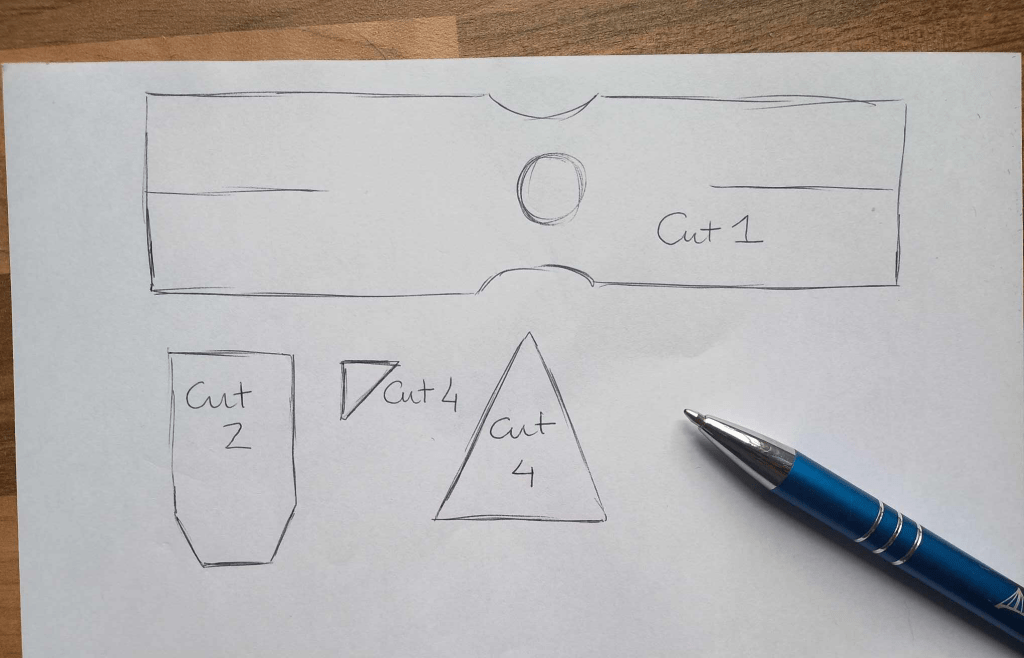
But what if I don’t want a tunic?
Due to the lack of extant garments in period, some extrapolation of sources is needed. In the 12th century depictions of working class men and women differ little in the cut of the clothes, the length being the only real identifier.
First understanding this tunic is key, once there you can be in the headspace of a medieval tailor. Further interpretation should be built from this tunic, and not using modern methods. This assures that results of editing come out looking and feeling authentic.
This allows us to take a tunic like the Bocksten man’s and extend it’s length for a female impression. We can also remove some of the gores, reducing it further down the ‘class ladder’ to someone with only the bare essentials of fabric to cover.
Similarly though, gores can be added to increase the wealth showing of the wearer. Sleeves can be tailored all the way in for later eras, or made large and billowy.
In part 2 I will be cutting out this dress, showing a simple way to perform drapery on yourself.
I will be ignoring the centre gores in this tunic, and also extending it. This is because I am in need of a dress for a lower working class woman. In keeping with the pieced nature of the original Bocksten, I will have one full gore and one half gore.
 Time Travel Garm
Leave a comment