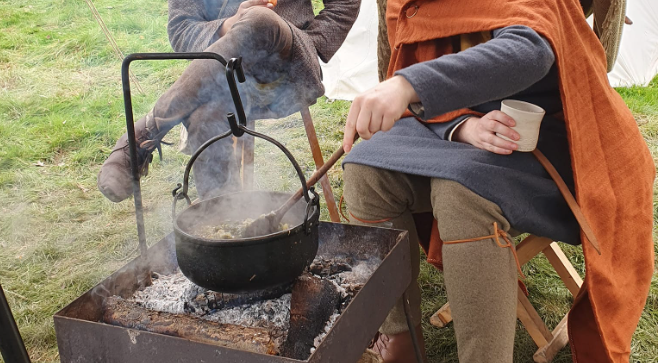
What goes in a pottage?
Pottage doesn’t exactly have a recipe, it’s a catch-all term for a bunch of things tossed together in a pot. What we put in our pottage at shows varies based on season, how many people we have and their dietary requirements. And it likely followed suit in the medieval period; Don’t like carrots? You probably make a slightly different pottage to your neighbour who loves the stuff. The pottage I make on camp usually follows the below formula;
- The Flavour
In the form of garlic and spices fried off together, read my post on the house mix to see what I put in there. The spice wasn’t used by all, adjust this depending on your poverty level, even a little clove rounds out the pottage. However the garlic is inarguable, as all but the homeless and destitute would have it. This is as it grows fat and plentiful in England and stores well. - The Vegetables
This changes seasonally, in the spring months famine may loom and you’ve got nothing but last years onions. However autumn you’ll be swimming in so many carrots and parsnips you’ll not know what to do. If you don’t grow your own vegetables, (either in a cottage garden or having some peasantry do it) head to a local farm shop and see what’s locally grown. Of course with the magic of modern farming and logistics you can put practically any vegetable in making this at home. - The Stock
What I call a ‘stock’ varies wildly. Sometimes it’s reconstituted dry stock, made by boiling stock down and drying it to a hard jerky like material. Other times however the stock could be the run-off from a meat roast. And other times it’s simply a few big fistfuls of herbs in water. Either way some way to impart a bit more body and flavour into the pottage is welcome. - The Bulk
It’s important to add something of ‘substance’ to the pottage otherwise you’re serving people a bunch of floppy hot vegetables. I usually do this with broad beans and peas. Both can be used fresh or dried and grow very well in the UK. Grains are another good option, pearl barley or wheat germ/bran. You would be surprised what the medieval cook had access to; Lentils, Rice, Almonds are all heavy imports for households and may have found their way into pottages. You can of course also add meat, I would advise cooking it first as this will 1. give you better texture and 2. assure it’s cooked all the way. Just chop up the meat to bitesize pieces and toss them in with the broth.
The Recipe
As with all my recipes these are vague guidelines. You can swap out ingredients to your hearts content, the below is literally just what I had in the farm shop and to hand when I went to make this recipe for you. Amounts are also rough suggestions, if you don’t have enough of each ingredient try to add a bit more of another similar one. IE. only a small onion? Put in another leek! No carrots? Find another tough root like parsnip or turnip. You could in theory make this with nothing but onions, or so many different things each bite is 40 flavours. This is the beauty of pottage.
For some seasonal information, I made this pottage in October; If this were still pre-industrial farming the alliums (onions, leeks, garlic) are being harvested and the carrots have just given their last crop. Big bitter leafy cabbages are ready for ‘final harvest’. And unfortunately it’s now too late in the year for beans so I’m leaning on a dry staple of peas and pearl barley.
Makes approx. 6 servings.
Ingredients
- Butter for frying (you can use any fat/oil)
- 1 Leek
- 1 Large onion (colour is immaterial)
- About a tbs of house mix (or Garam Massala to cheat)
- 1/2 bulb or 4 bulbs of garlic
- 3-4 Carrots
- 1 Cabbage or other big leafy green
- 500ml of stock (fresh, cubed or boullion works)
- Water to top-up
- 1 mug (200g) of peas (can be swapped for any dried pulse)
- 1 mug (200g) of pearl barley (easily swapped for rice)
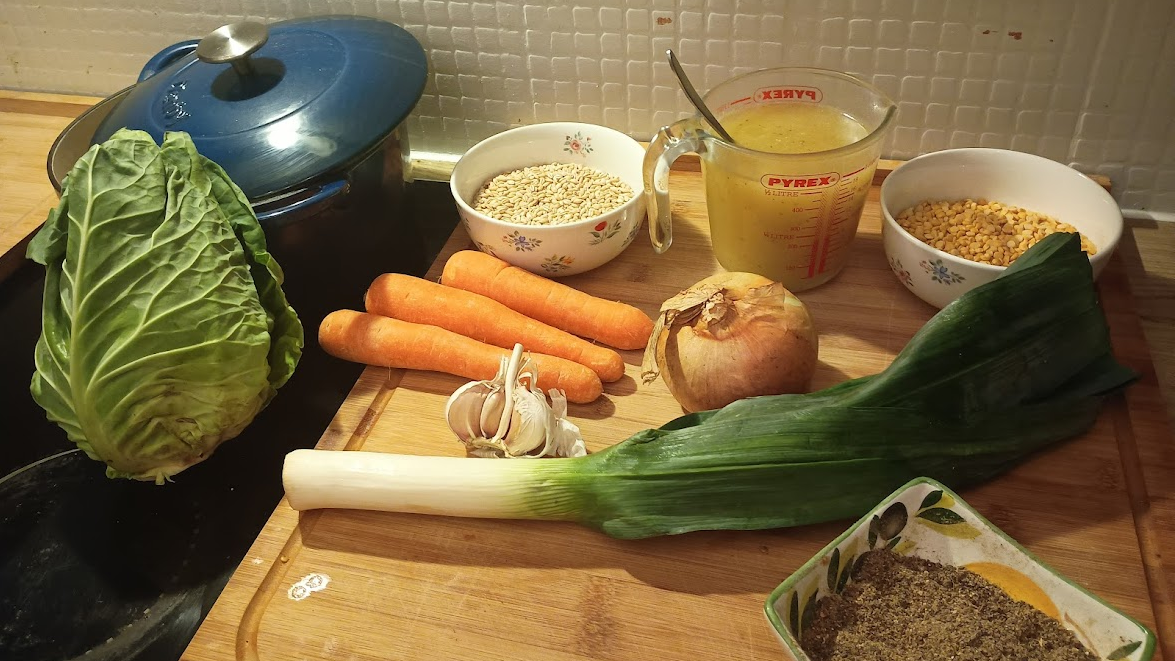
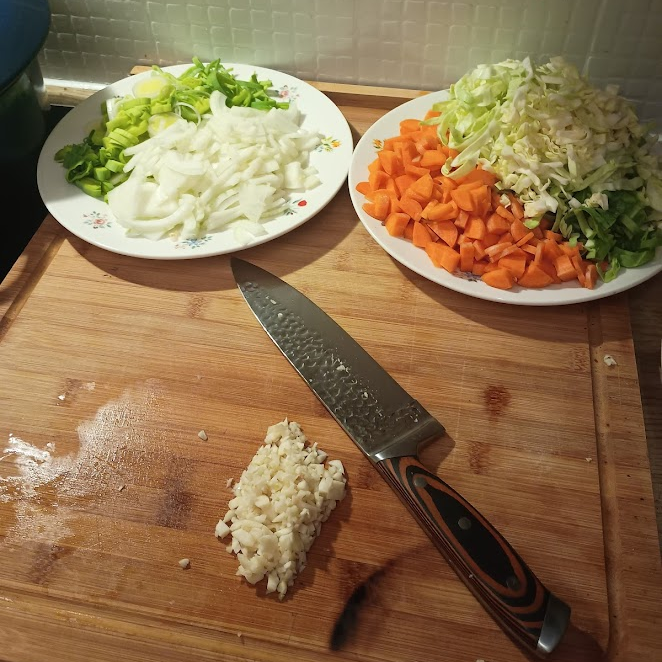
The first step is to chop up all your veg, this doesn’t need to be done too fine or neat. Slice onions and leeks as fine as you can, and make carrots and cabbage into easy to eat sized chunks. I usually pound my garlic using a mortar and pestle, but chopping will also do.
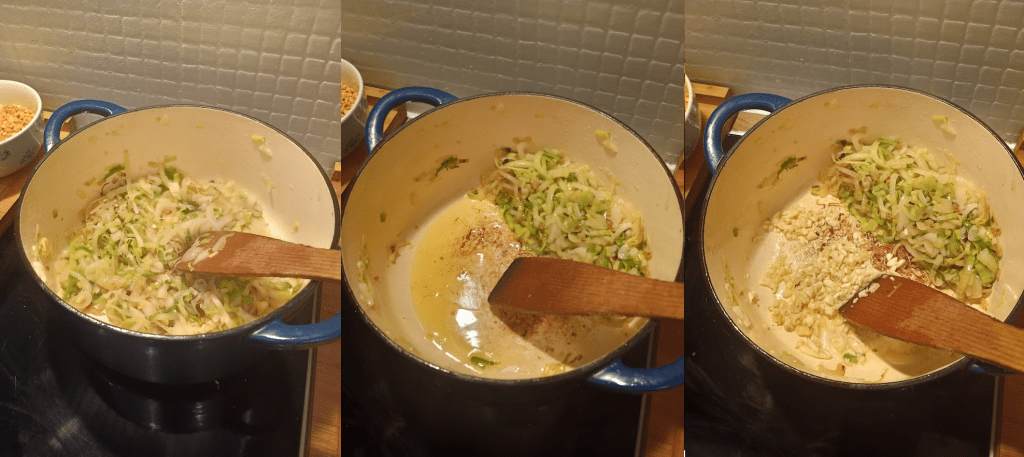
Heat a casserole dish, saucepan or cauldron over a medium-high heat. Into this add a good few tbs of butter or other oil, you’re going to need enough to fully coat all the onions and leaks. Into the butter put the onions and leeks. We want to fry these until they start to go soft.
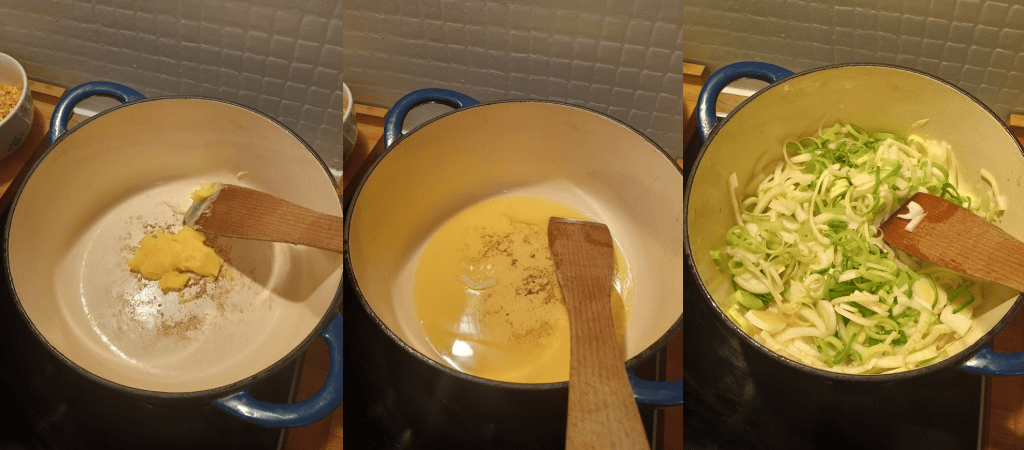
Once soft, push the onions and leeks to the side and in a open area of the pan put some more butter/oil. Fry the garlic gently in this open spot until it starts to brown, and throw over the spice mix. Stir everything in the pot together.
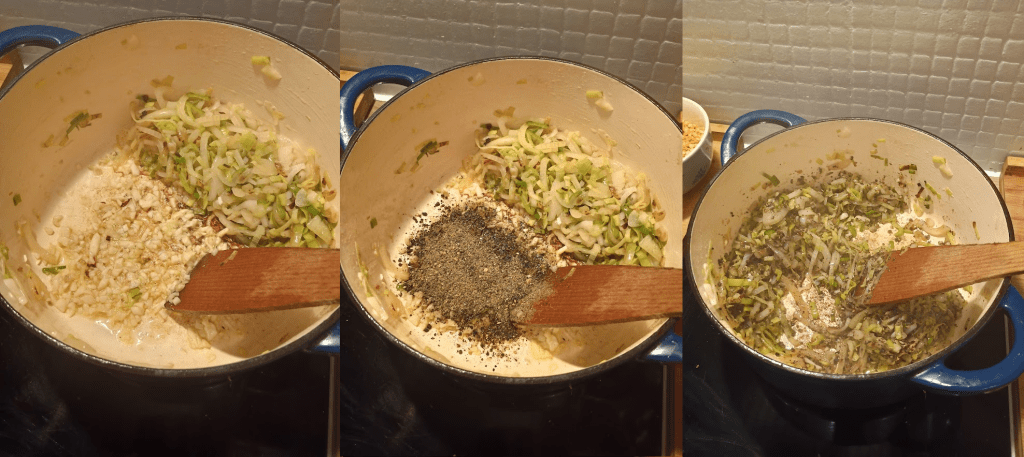
Add to the pot the cabbage and carrot, stir to move these to the bottom of the pan. This is easiest done by scooping the mix from the bottom and folding it over the top. Allow this to sit undisturbed for a few moments in between ‘scoop’ stirs until the cabbage starts to wilt.

Now dump all the stock and dried goods into the pot. If there is any room to spare top this up with plain water. Increase the heat to bring this to a rolling boil, then lower until it’s just simmering. You want it to be bubbling every few moments but not on the cusp of roiling over the edge.
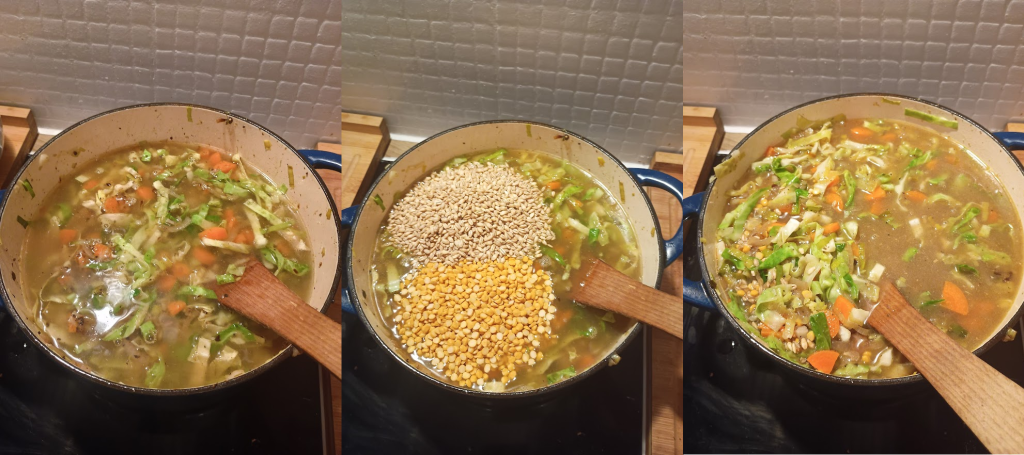
We have reached the easy part, leaving it to stew. Let the pot softly bubble for about half an hour, check if this is ready by picking out a root and pulse and making sure they are an edible consistency. If your carrots are still crunchy or your peas still hard then leave it to boil longer, check in every 10 minutes or so. Unless you completely forget about it for days pottage cannot burn, you can top up the water if it starts to look dry.
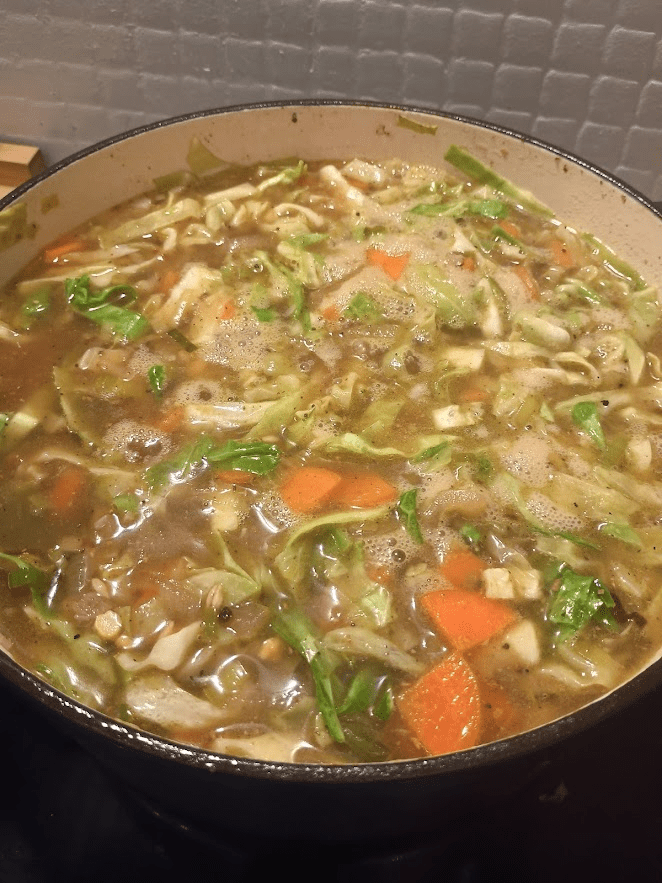
Once all the ingredients have reached an edible consistency it’s time to serve. Pottage is good on its own, or with a good chunk of bread to mop it up. An invention of the CDR camp is to melt a fat chunk of brie in there which in all opinions is brilliant.

 Time Travel Garm
Leave a comment