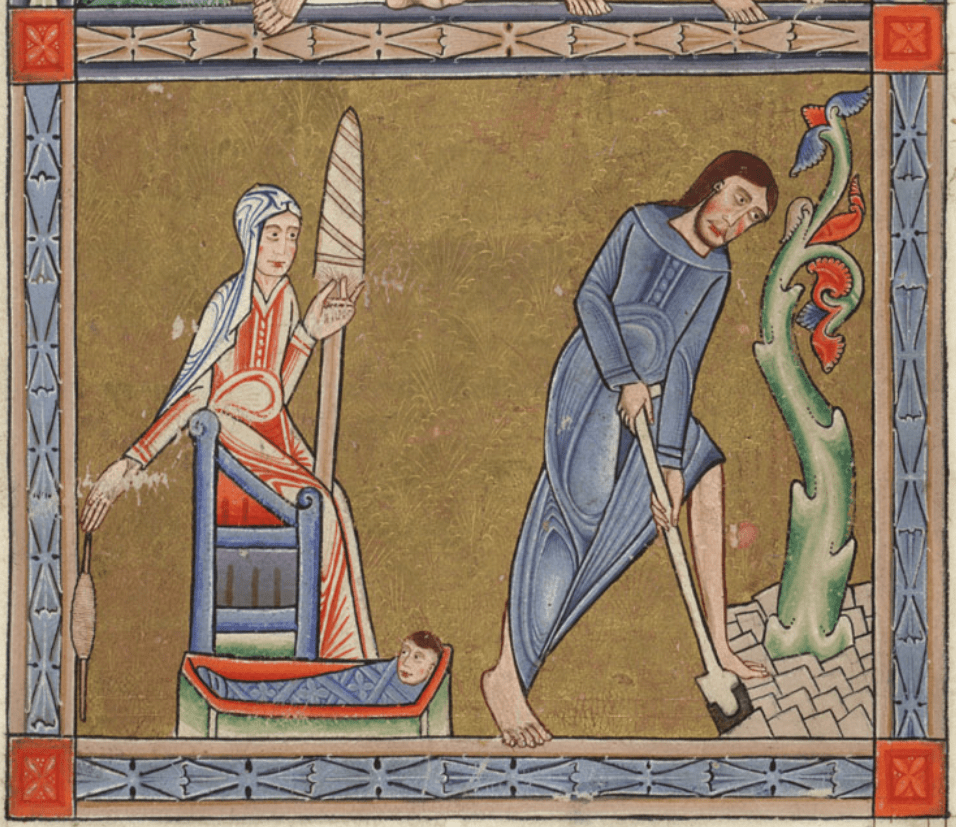
I often see this above particular image of Eve spinning from the Huntarian Psalter being used to argue for either complex embroidery or elaborate closures on the chest and neck of high medieval gowns.
It certainly shows a selection of lines or details across the chest, wrists and body. However seeing these as anything but a way to depict how fabric falls is incorrect (in my opinion).
How can we tell this?
Comparing throughout the work
The easiest way to confirm what is artistic flair vs realistic presentation is to look at the other depictions within the same work. Incredibly helpful in this example is that this depicts Eve; And so we can see how the artist depicts the same character fully nude. The same lines are shown over the centre chest, indicating a deep dip between pectorals or breasts. This overexaggerating of bodies is common in medieval art, and is usually down to an art style born from studying corpses.

We can also see the same details made clearer in a much more ‘obvious’ drawing. The below being two soldiers depicting Gemini. As these are supposed to be twins, the same visual depiction of the folds to the centre of the garment can be seen on the left as the straight lines; And on the right as triangles.
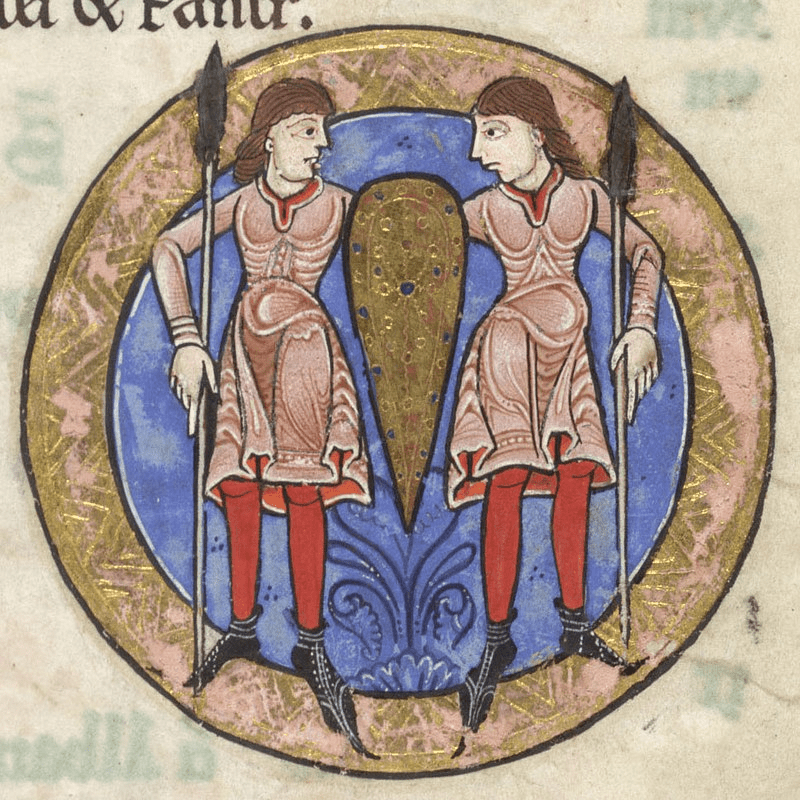
Throughout the manuscript characters are depicted with these central line details, mirroring those of the lines and folds of their ‘skirts’. The best interpretation of such lines on the chest is much more likely to then be cloth falling into the valley between breast or pectoral. Much as would be expected from the large loosely cut garments of softer falling fabrics evidenced elsewhere in 12th century sculpture and art.
Comparing to other sources
As I said above, ‘elsewhere in 12th century art’ is where should be turned to when a particular artist is presenting strange details.
A great example of how a dress should look in this period would be the effigy of Eleanor of Aquitaine. Sculpture is a less interpretive form of expression when it comes to clothes and art (although it should be fully ignored for likenesses as they were usually ‘beatified’ or made by those who had no idea what the person looked like)
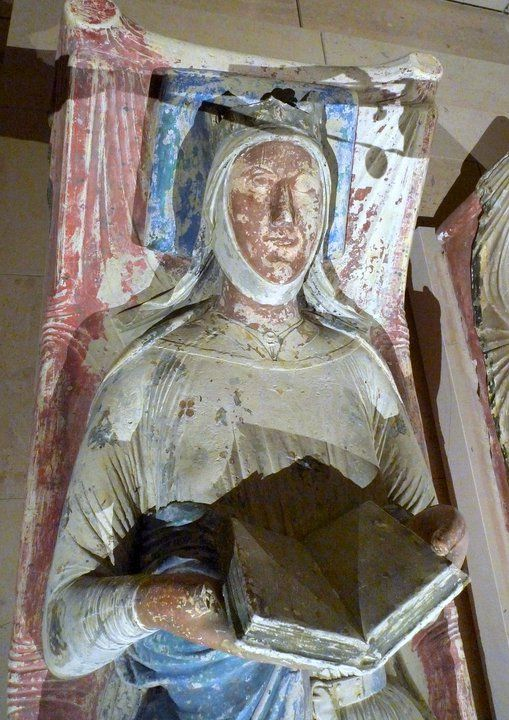
In the above, we can see the folds of fabric at her wrists, showing the fabric is pushed up and gathered there. The same gathers are seen pooling around her armpit, underarm, and between the bust. Although this effigy isn’t particularly busty (likely due to beauty standards of the time), the cloth is still shown to gather either side of the bust. It can be seen in harsher detail in the below 19th century copy.

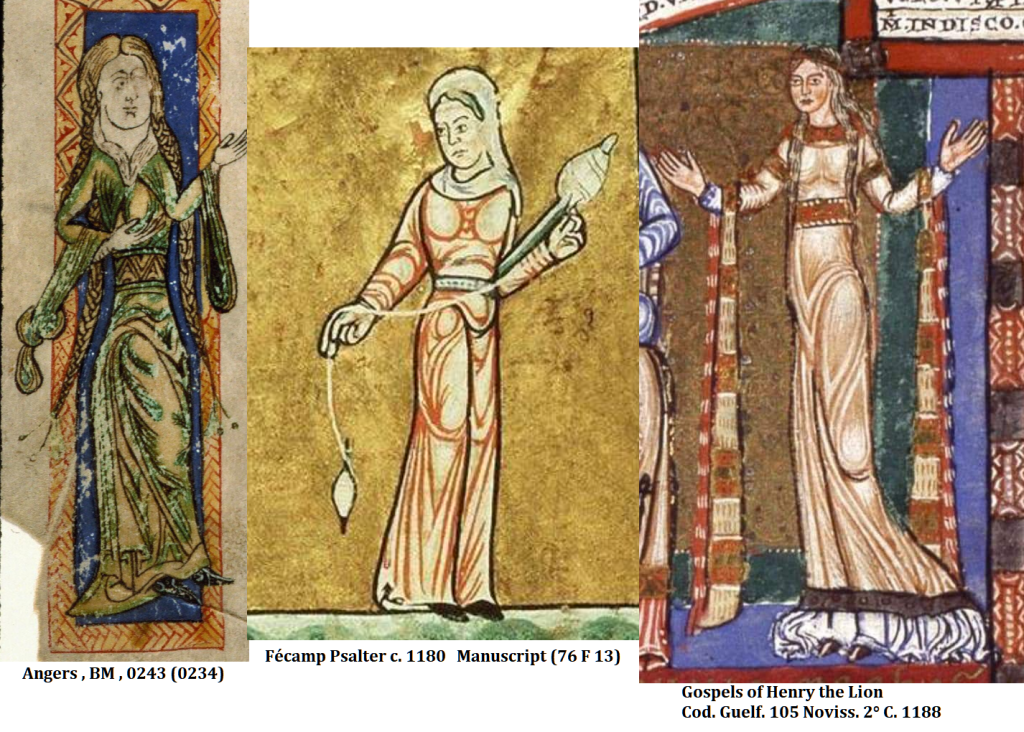
Other manuscripts can also be looked to; Throughout all my looking at ladies in 12th century illuminations I haven’t found any with embroidery down the chest. However there are plenty showing the same fabric folds collecting about the bust.
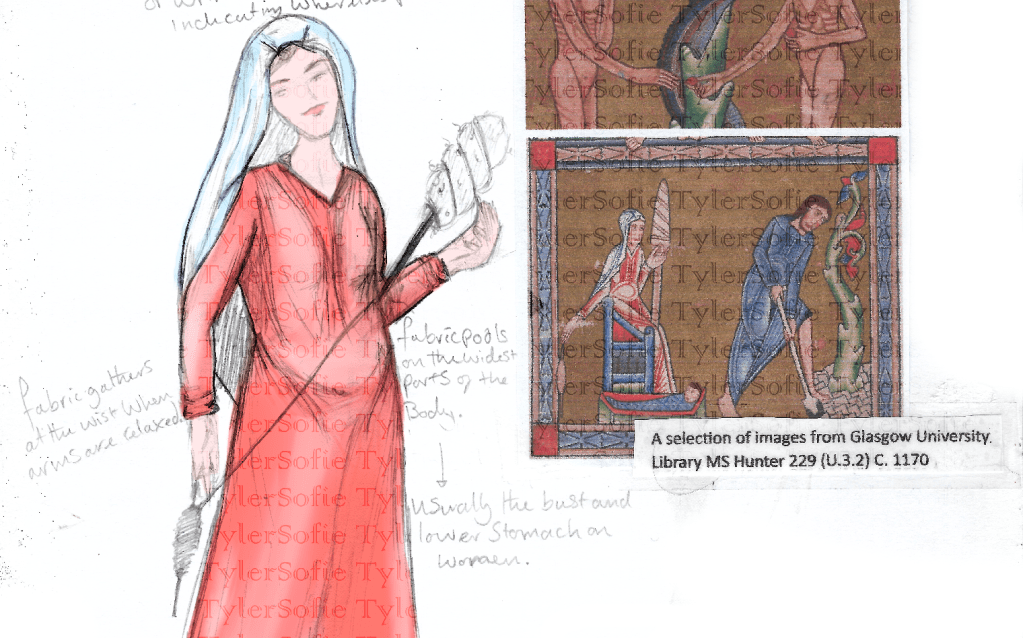
Interpreted out in a modern sketch
Using our ‘original’ source and cross referencing with similar sources of this kind of wealth and social class within the era we can create a modern depiction of the garments worn.

 Time Travel Garm
Leave a comment